

In today's intensely competitive business landscape, providing an outstanding customer experience has become a major concern for companies across multiple industries. Clients now demand tailored interactions and seamless service at all touchpoint, and fulfilling these demands requires a commitment beyond mere goodwill. This is where customer relationship management (CRM) software plays a crucial role. With advanced CRM solutions, companies can not just streamline their processes but also build long-term relationships with customers.
CRM software offers a robust toolkit that empowers businesses to gather and examine customer data, monitor interactions, and coordinate communications effectively. With these insights, companies can adapt their offerings to fulfill the unique needs of every client, thereby improving satisfaction and retention. As we explore the numerous advantages of CRM solutions, it becomes clear that adopting such technology can dramatically improve the total customer experience, transforming the way businesses interact with clients.
Benefits of Customer Relationship Management Solutions
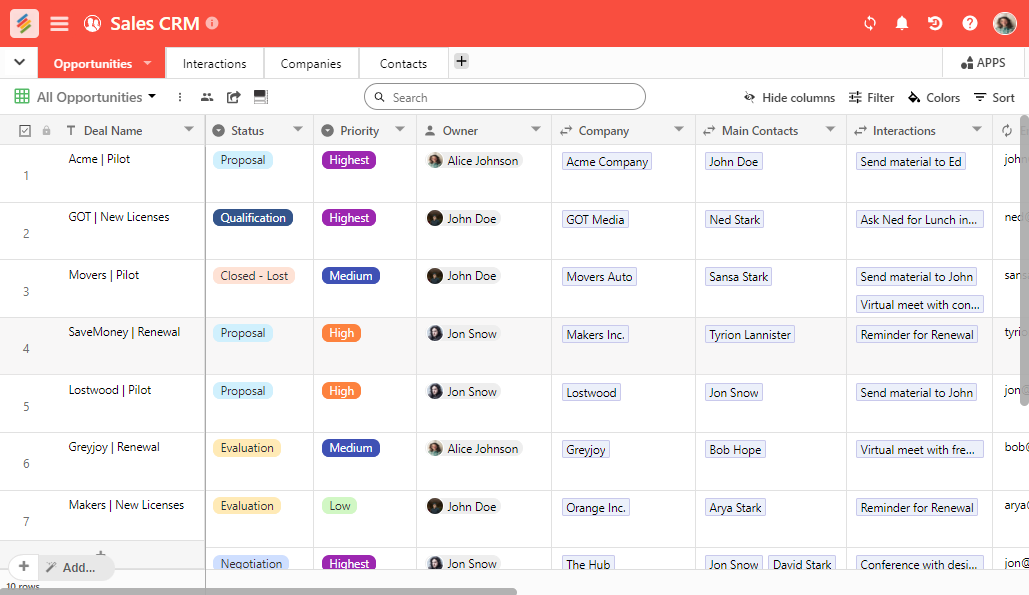
CRM solutions delivers a variety of benefits that can dramatically enhance organizational performance. One of the main benefits is the power to consolidate customer data. With customer relationship management solutions, all data related to clients, including transaction records, preferences, and interaction records, is maintained in one easy-to-reach place. This allows businesses to have a comprehensive view of their clients, which enables more strategic decision-making and personalized marketing efforts.
An additional notable benefit of CRM software is better communication and cooperation among employees. By providing a unified system for sales teams, marketing teams, and customer support teams, CRM solutions support better harmonization and make certain that all team members is on the same track regarding client engagement. This unity leads to more coherent messaging and a integrated experience for customers, ultimately improving user contentment and allegiance.
Moreover, customer relationship management systems boosts productivity through automation of mundane tasks. By automating processes such as email follow-ups, setting appointments, and data input, businesses can free up valuable time for team members to devote efforts to more high-value projects. This not only boosts productivity but also reduces the risk of human error, further enhancing the overall standard of customer interactions and care.
Key Features to Look For
When selecting a customer relationship management software, one of the most crucial features to consider is ease of use. An easy-to-navigate interface allows team members to adopt the software quickly, reducing training time and increasing productivity. A hassle-free experience ensures that users can move through customer data, sales pipelines, and analytics tools effortlessly. The more streamlined the platform, the more likely your team will interact with its tools to enhance client interactions.
Another essential feature is the ability to integrate. A powerful CRM should seamlessly connect with various business applications, such as automated marketing platforms, email platforms, and e-commerce solutions. This interconnectedness allows for a complete perspective of customer interactions and guarantees data transfers seamlessly across departments. By having all information centralized, businesses can provide more personalized experiences and optimize operations effectively.
Finally, comprehensive analytics and reporting tools are important in a CRM solution. Such tools enable businesses to track KPIs, customer behavior, and sales trends throughout the year. Comprehensive insights empower teams to make informed choices, enhancing strategy and client relationships. With the right analytics, you can spot opportunities for improvement and ultimately enhance your client experience.
Executing CRM Strategies Efficiently
To implement Customer Relationship Management software effectively, businesses must start with a definite grasp of their goals and customer requirements. This involves evaluating existing consumer interactions and identifying issues that the CRM can address. Setting defined objectives, such as enhancing customer loyalty or streamlining communication, allows groups to choose the most appropriate Customer Relationship Management functions and resources that fit with their corporate strategy.
Training and integration are essential components of effective Customer Relationship Management implementation. Staff should be equipped with the necessary abilities to leverage the latest system efficiently. This can be achieved through interactive instruction classes, detailed user documentation, and ongoing assistance. Involving staff in the initiative fosters buy-in and cultivates a climate of cooperation, ultimately boosting the overall effectiveness of the CRM solution.
Lastly, ongoing evaluation and adaptation are vital for enduring performance. Companies should consistently review the functionality of their CRM solutions, gathering responses from users and clients equally. Analyzing data such as client satisfaction and operational performance can offer insights into aspects for enhancement. By promoting a process of feedback and enhancement, businesses can make certain their CRM systems remain aligned with changing customer expectations and organizational goals.